Comparing Inspection Reports

As we’ve mentioned in previous blogs, ALL HOME INSPECTORS ARE NOT CREATED EQUAL. A home inspection is not just a formality. A home inspector brings with him various levels of knowledge, experience and training or expertese. Another vital component that needs to be taken into consideration is the reporting system.

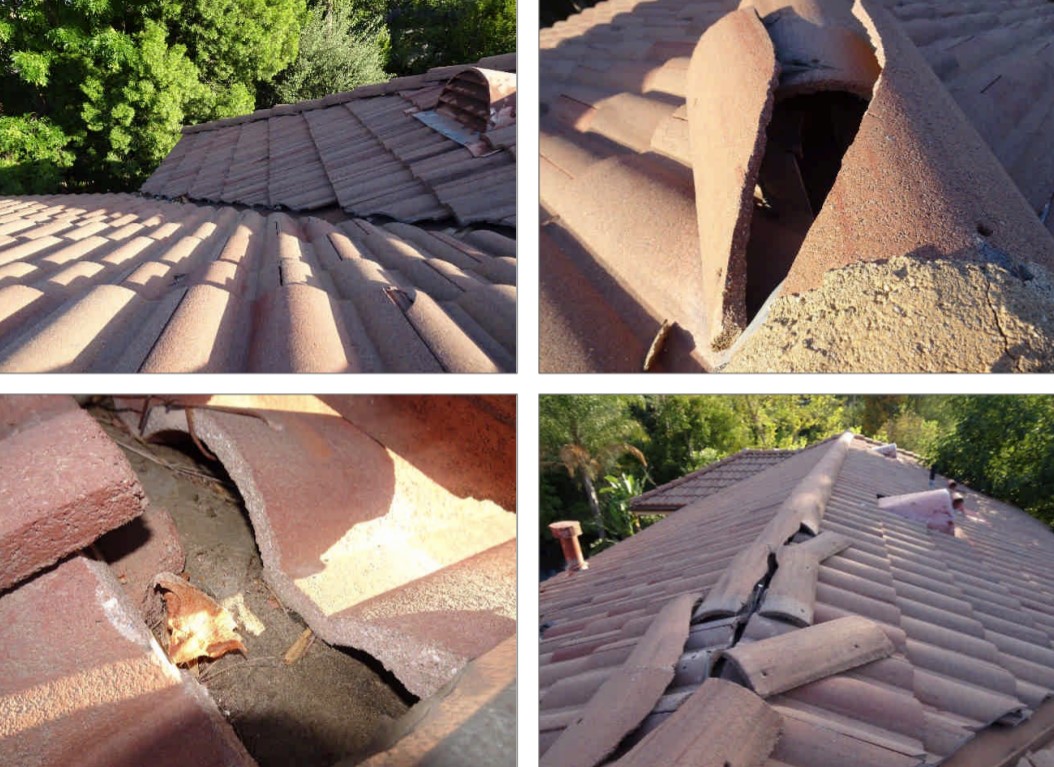
When interviewing inspectors a question that needs to be asked is what type of a report is provided and what the typical length is. First of all make sure that you are getting a computer generated report. There are some inspectors out there that will still hand you a hand written report on site. Next find out if ther report provided is a checklist report, a narrative report or a combination? Also be sure to ask if the report will contain digital photos, especially of hard to explain items or areas that are not easily seen by the buyer such as on the roof or in the attic.

Checklist reports tend to be short, vague and uninformative. They provide information for a particular component that tells whether is is serviceable, fair, good, poor, etcetera. There is no detail invoved and comments are often generic and not tailored to a particular home. Checklist and narrative combination reports are slightly more informative but there is still a lack of clarity and does not provide an accurate assessment of a property.

A narrative report provides the most helpful knowledge to a perspective buyer. It can explain in detail, locations, components conditions that are easlily understandable. An inspector can also provide suggestions for long term care and maintenance if an item is a relatively minor issue that just needs basic care. Narrative comments can also be more helpful to buyers when asking for repairs or to sellers that are trying to accomodate the buyer’s request. This type of report truly reflects the knowledge and expertese of the inspector. Make sure to ask to see a sample of the reporting system used before making an appointment.

Posted in Posts | Leave a comment

Can you really “not” afford to take the time for this?

A Home Inspection is NOT a Formality – All Home Inspectors Are NOT Created Equal

We’ve been noticing a trend lately with the various time lines in which the buyer has to get his/her inspections performed. I’ve seen anywhere from five to seventeen days allotted for inspections. Heck, I’ve even seen instances in which the buyer has to get an inspection before the bank will even open escrow. I get this. But, what I don’t get is the nonchalant approach that some buyers, or even realtors, have with respect to getting a home inspection scheduled. It is amazing, that some buyers we’ve spoken to are willing to forego taking time from work, play, or otherwise to have this one single critical service performed.

Similarly, buyers will often put off scheduling the inspection to the last minute, thereby, reducing their opportunity to have the service performed by a truly professional, fulltime inspection company. Most “good” inspectors who do this full time are booked days in advance, even in this market.

“Marc, are you suggesting that other companies that are available at a moment’s notice are unqualified or bad?”. No, I’m not suggesting that at all. I’m simply saying that after being in this business as many years as I have, you have a pretty good idea who your competitors are. Of course, some inspectors are better than others, like everything else in this world. It just seems to me that there are just a few of us who cannot accommodate an inspection “the very next day”.

Here’s some advice: when you are choosing between inspectors, verify or certify that the individual investigating the largest single investment of your lifetime for you. Choose wisely. Do your due diligence. Don’t just accept any company based on their schedule compatibility with yours.

Here are some Do’s and Dont’s
• Do not choose an inspector based solely on price.
• Most good inspectors are busy and typically charge a little more. Pay more for a good inspector now or pay later (meaning with deficiencies not discovered at the inspection).

• Do not choose an inspector based solely on his “association affiliations”.
• Do choose an inspector based on years of experience as a CONTRACTOR, qualifications, knowledge in construction, reporting methods, etcetera. Most of these associations do little to nothing to prove the knowledge or experience of an individual. They require a yearly fee for membership, a business that requires a profit like any other.

• Do not wait until the last minute to schedule the inspection.
• Do start interviewing inspectors before you even open escrow. You have no idea how many have such little real hands on experience in this industry. Remember, there are no licensing qualifications or in becoming an inspector…anyone can do this.

• Do not interview only the recommended inspectors on a realtor’s list – Yes, even me… you bet, interview all of these guys.
• Do ask friends, family members, and search the web. Spend as much time as you possibly can with this. Heck, you can even ask us. We’ll give you a list of the guys we feel are most qualified and refer our business to when were too busy. Just be sure you go beyond the realtor list.

• Do not limit your choice of inspectors based solely around your personal schedule, i.e. work, play, shopping etcetera…
• Plan to take a day off of work, if necessary. Trust me, this is too big of a purchase, investment or otherwise to treat merely as a formality in the escrow process. Try to be there. There is so much information you will want to hear by being present that just isn’t the same as reading the report afterwards.

• Do not choose an inspector who is going to inspect your house in “the shortest time possible” as not to inconvenience the realtors.
• Do choose an inspector who is going to take 2-3 hours on an average sized home. Do choose an inspector who is going to provide you with a thorough evaluation of your potential home, NO MATTER HOW LONG THE INSPECTION TAKES… Some realtors or sellers love to pressure the inspector to finish quickly in order accommodate their schedules. Some even refer inspectors who are fast and provide short vague report. This makes the negotiation process much easier.

• Do not choose anyone until you have sampled their reports and stay clear from checklist reports.
• Do ask for a sample of their report. Most inspectors should have one posted on their website. A narrative report is a must! I would never accept a check list style report as they are vague and inconclusive.

• Do not choose an inspector who is not insured.
• Do ask the inspector if they have Errors and Omissions and General Liability insurance. Insurance for home inspectors is very expensive and most full time inspectors should have this insurance. For your protection, you should insist that the inspector you choose has E&O and liability insurance. Some part time inspectors will typically omit this type of insurance simply due to costs.

• Do not choose an inspector who hasn’t performed at least 1,000 inspections.
• Do attempt to find an inspector who is seasoned. It takes years to perform at least 1,000 home inspections. Like with most things, you are likely to get better with repetition and home inspections are no exception. In fact, the more inspections you perform the better familiar you (the inspector) will become with any inherent issues that most housing tracks possess. We have performed over 10,000 inspections to date.

• Do not hire a part time inspector.
• Do try to hire an inspector who is full time for so many reasons mentioned in this post. Part time inspectors may charge a little less, but that’s because inspections are usually performed as “filler” to another full time trade or job. In my opinion, part time inspectors probably wouldn’t be part time if there was sufficient work available to them, which may directly speak to their ability as an inspector.

• Do not choose an inspector who offers to do work after the inspection.
• This is called a “conflict of interest” and is against the law in California.

• Do not choose an inspector who will not crawl under houses or go into attics.
• Do make sure that the inspector you interview will crawl under a house or go into an attic. These areas house some of the most important components of the home such as plumbing, framing, electrical, ducting, vents, etcetera.

• Do not choose inspectors who do not use INFRARED cameras.
• Do insist the inspector you interview uses an infrared camera with their inspection. The use of Infrared in an inspection is invaluable and can detect potential problems such as water leaks or electrical issues not seen with the “naked eye”.

Posted in Posts | Leave a comment

The Use of THERMOGRAPHY in a Home Inspection

Thermography is the use of an infrared camera to take pictures using infrared energy or radiation that is emitted from objects, which allows us to see the variation in temperatures. That temperature difference is what makes it possible for the technician to spot moisture intrusion in a ceiling, floor, wall or roof, poor insulation or a hot spot in an electrical panel not visible to the human eye.

Only a handful of home inspectors use an Infrared camera on their inspections. There are a various reasons that not all home inspectors use this type of state-of-the-art technology in a typical home inspection.

One of the reasons is that an infrared camera is quite expensive to purchase and to maintain. They can range anywhere from a few thousand dollars to upwards of twenty thousand dollars. The training that is necessary to properly operate and use efficient techniques to analyze the pictures taken, is also costly, not to mention, it takes an extended amount of time to achieve this certification.

Another reason that some home inspectors do not use thermography as a part of their inspections is because it creates additional work for them. It takes more time and effort to create the conditions necessary for this type of imaging during an inspection. If moisture is identified through the use of infrared, follow up testing with various moisture meters will follow in order to help substantiate the findings. This process can also be time consuming when inputting the pictures and analyzing these thermographs to identify any anomalies or defects that may appear on the images. A trained thermographer needs to view the picture and interpret their findings, based on their knowledge of the home and apply the theory learned in training.

The last reason a home inspector may not choose to use this type of technology is because it can bring certain issues to light that would not have been identified otherwise. Some inspectors do not like to make transactions more difficult for the agents that use them on a regular basis. This makes the transaction a lot easier for everyone, except for the buyer, who has to deal with these issues once they move into the home.

Why would any buyer choose to use an inspector that is not doing everything they possibly can to inform the client of the potentially costly or hazardous conditions that may exist in a house?  Mazza Inspections uses proprietary methods when conducting inspections using infrared to identify possible electrical or moisture intrusion issues

Posted in Posts | Leave a comment

Fire Certified

Much like the electrical, plumbing, roof and other major components of the home, the fireplace and chimney are enormously significant when it comes to personal safety and cost of repairs. Some buyers may think that they are not going to use their fireplace so they won’t worry about the condition. Those buyers need to think about the resale value of trying to sell a house with an unsafe chimney or fireplace. It will just cause them time and money in the future when they decide to sell the property.

Fires caused by poor maintenance of chimneys and fireplaces happen on a daily basis all over the country. Homes are destroyed and lives are lost due to such disastrous fires, which could have been prevented. These fires can be prevented by proper maintenance and repair, which starts with the proper inspection.

The F.I.R.E. Certification program is the most advanced program within the hearth industry. The goal for all F.I.R.E. certified inspectors is to prevent property damage and personal injury. It is their intent to reduce the number of structure fires that result in millions of dollars of property loss and personal injury each year. These losses and injuries can be reduced with an accurate evaluation by a qualified F.I.R.E. certified fireplace and chimney inspector.

All F.I.R.E. Certified inspectors have successfully completed three advanced educational courses. To stay on top of ever-changing products, standards and building codes, they are required to recertify every three years and are required to attend additional education programs.

It is not a simple task to identify the issues that can be found within a fireplace or chimney. Specialized training and education is necessary to be able to examine and evaluate the condition properly. There are only a few professionals willing to put forth the time, effort and finance involved with this certification. It not only takes weeks of time but thousands of dollars. In Los Angeles County, there are only 2-3 other F.I.R.E. Certified home inspectors. If you are going to get your home inspected anyway, shouldn’t you have it inspected by someone more qualified than your typical home inspector?

If you would like to learn more about the F.I.R.E. Professionals, please visit www.fireassociates.org.

Posted in Posts | Leave a comment

“Good Deal” – Think Again..

Inspection companies that charge lower fees are not doing you, as a buyer, any favors.

It suffices to say, that just because you are getting a “good deal” does not mean you are getting a professional and thorough inspection backed by experience and knowledge in construction. In fact, they are probably doing you a complete disservice by luring you into an insufficient inspection as a result of quoting you lower fees. A more than qualified inspector has credentials, experience and insurance to back up their inspections and inspection fees.

Buyers need to do their homework or due diligence when choosing an inspector. The decision should be based on quality not price, of course, price within reason. Just as with any trade or industry, not all inspectors are the same. It is not like choosing between Coke and Pepsi, or Lowes and Home Depot. Unless the buyer has been give the recommendation by a previous buyer, trusted friend / family member, or used the inspector in the past, he or she has no idea who they will be working with.

The first step is to find out if the inspector or inspection company has a website. Normally, a credible inspector will have a decent website that will explain their inspection, services they offer, credentials / experience, sample reports and other helpful information that enables you to make a decision based on knowledge, not price or availability.

Once you have narrowed down your list via website information, it is time to make some calls. This is the opportunity to verify the information found on the website and ask about fees. There will be many signs of a professional company such as the office staff, procedures, fees, and etcetera. Availability will also play a part. Most likely, a well respected and often recommended inspector will not be available the same day or the next day, unless there is a cancellation or they decide to work on their “day off”.

Fees will range and vary due to the fact that the fees are set by each inspector or inspection company. There is no industry standard just as there is no industry license required for home inspectors. If you do your research properly, you will be able to make an informed decision. You can always ask for references from previous buyers or realtors as well.

It is not worth the savings of $25 – $100 dollars now as opposed to what you could be facing once escrow has closed and you have no recourse but to threaten a lawsuit against the inspector and, in many cases, the realtor. From experience, we have seen the amount of money that we have saved our buyers. Either the seller chooses to take care of the issue for the buyer to continue with the sale, or the buyer moves on to the next house in which there are not costly repairs involved or safety hazards. Remember, the savings may not just be monetary but the lives and safety of your loved ones.

Posted in Posts | Leave a comment

Insurance

Errors and Omissions insurance is insurance that covers items that may be missed during the course of a home inspection. Home inspection insurance is NOT mandated by the state. The inspection industry is a difficult and very litigious business to be in. Many inspectors are doing this part-time in this vulnerable market and, as a result, may not elect to carry the necessary and, very costly insurance. The insurance cost averages from $3000 – $4000 per year. This is why it is so important to make sure that you are dealing with a professional, full time home inspector, as in most instances, they do carry full insurance for their inspections. Don’t just assume that everyone carries a policy.

We inspect so many houses, and within these houses, are literally thousands of components. As human beings, we are all susceptible to imperfection. This is why we carry Errors and Omissions and General Liability insurance and our claims record is impeccable! We can and will be happy to provide you with a copy of our insurance at your request. Our insurance covers damages up to $1,000,000.

There is a process involved with making insurance claims. The home inspector must be given the opportunity to investigate the item in question, prior to any repairs taking place. Sometimes buyers don’t realize that certain items can’t be detected or seen during an inspection and at this point, find out the claim is not valid. If the claim is valid, then the home inspector may choose to take care of that issue for the buyer through his business or may choose to file a claim with his insurance. It is very important to make sure that the buyer signs an inspection agreement. Most insurance companies do not insure inspections that do not have a valid agreement or contract.

Posted in Posts | Leave a comment

The Numbers Don’t Lie

As home inspectors, our sole obligation is to uncover issues which lie in wait within the structures we evaluate. Like most homes, the issues can be numerous.  In a typical transaction, after the inspection has been performed, the buyer has the option to request from whomever is the owner of the property, that some of these repairs be performed (or a credit for the repairs) prior to the close of escrow.

We find this process very interesting from the position of an inspector. More specifically, we are curious as to the cost of some of the repairs regarding issues which we uncover during the course of an inspection. If possible, we collect data from our clients, realtors, contractors or others who perform these repairs in order for us to put into perspective the real life financial impact the items (we uncover) can inflict onto our clients.

We took a few moments to tally these numbers so you, the buyer, can get a sense of the potential consequences of hiring an inspector who may not be working in your best interest.

As stated previously, these numbers were all provided by our clients and / or some realtors, as a courtesy. They derive from various contractors, home owners, subcontractors, handymen,  general laborers and others. These numbers have been rounded off.

January 2010 – January 2011 – Repairs Costs Identified

Roofing

$26,000.00

HVAC

$32,000.00

Plumbing (mainly shower pans)

$56,000.00

Electrical

$18,000.00

Chimney / Fireplace

$100,000.00

Posted in Posts | Leave a comment

Is Saving $20 bucks Really Worth It?

You may be wondering, while doing your due diligence, how inspection fees can be all-over-the-map. I have a couple different theories on this topic. In this industry, for the most part, there are two types of home inspectors, full time and part time.

Full time inspectors, for example, have fixed costs to run the business, AKA, overhead. Most of this overhead being insurance, that covers you, the buyer, in the event that an item is missed or misdiagnosed. Insurance also covers the seller, in the event that we damage something while conducting an inspection. Fuel cost is very high, uniform cost, equipment cost, advertising cost, software cost, website cost, education cost and the list continues. For the full time inspector, who does not rely on other sources of income to float his part time business, these fixed costs are not necessarily an option. For without them, our ability to deliver a superior product may be substantially hindered. Without a superior product, our ability to receive referrals and build a “happy customer referral base” may not exist, which, by default, may unfortunately force a full-time inspector to, well, become part-time.

Personally speaking, we spend approximately $15,000 to $20,000 each year on education, and equipment alone. Much like cars, computers and smart phones, equipment has a life span and the manufacturers find ingenious ways every year to make the equipment we buy easily out-dated. Education is also very expensive. I recently signed up for a one day (8 hour) seminar about water intrusion that has a price tag of over $2800. We are purchasing new sonar equipment for moisture detection, with a price tag of over $8000. The class to train us how to use it is $1800. Frankly, I feel we would be doing our clients a disservice by not keeping up-to-date in these areas. All of these costs are not necessarily an option to provide a top quality service to our customers, especially when we are the last line of defense between you buying a dream house, or the money pit.

We spend, on an average 1200 square foot house, 2.5 to 3.5 hours, performing an inspection. I won’t go into the details of components inspected, but trust me when I say there are thousands. I say that to say this; with each hour spent on site performing an inspection, there is an equal amount of time spent generating the inspection report, hour for hour. The report is a narrative style report that is at the very least 65 pages and almost every page of descriptive content is hand typed by the inspector.
Part time inspection companies will pose themselves as a full time service company and it’s pretty tough to distinguish them from the rest. I am sure there are many part time inspection companies that are competent with respect to building science and the knowledge that goes into performing a residential or commercial building inspection. But there is a difference between the part time inspector who may see one or maybe two houses a week as compared to an inspector who works full -time and sees over 12 houses a week.

Part time companies are cheaper in price by $20 or $30 dollars and I have even been under bid by as much as $100 dollars. Is it worth saving 20 or 30$ to come to find that the missed or misdiagnosed items can exceed the $20 savings in no time. Off the top of my head, I have added the total sum of chimney repair costs that we have uncovered in the last 6 months and adds up to $72,000, spread over 5 chimneys. This is to say, almost every time we suggest a chimney expert scan the chimney, the damage exceeds 14,000.
As you can see, saving a few dollars may end up costing you thousands and even tens of thousands and it is not completely impossible to say, maybe even more than that.

Needless to say, the person who has the most to lose is a buyer who bases their entire decision on the amount of the fee quoted by the inspector, and NOT their experience. As an inspection company, we just lose an inspection, but for the buyer, who may sacrifice experience for price, they forfeit far more than that…the ability of having foresight.

Posted in Posts | Leave a comment

Are You Qualified?

What are your qualifications? This is one of the most important questions that anyone looking for a home inspection should concern themselves with, which, by-the-way, is almost never asked. Think about that…you’re buying a house worth thousands, or hundreds of thousands of dollars, and the first question asked is, “How much?”, not withstanding the fact that most buyers base their entire purchase on the outcome of the property inspection report. Based on this, one would think the qualifications would trump price.

The second question is always, “When can you do it?”, and maybe, if a prospective client is still interested at this point, “What are your qualifications? “.
I don’t blame the clients. I place the majority of blame on how the real estate purchasing experience has evolved up to now. In my opinion, there is way too much emphasis placed on the “time period” and rushing the client through the process. It’s this sense of urgency, I believe, that devalues the significance of the home inspection.

Regardless, the home inspection will, however, remain your last line of defense when buying the house of your dreams or the money pit. This is why the individual you choose to inspect your house, should be absolutely qualified to do so. So what is “qualified”?
As a trainer of new home inspectors, I have seen them run the gamut. Now, I have no prejudice against new, or minimally experienced home inspectors, as I was once one of them. But, as we get older and much wiser, I have come to the conclusion that I know a considerable amount more information about property inspections than I did when I began. This is equally applicable to part time inspectors. Again, it’s difficult to get better in this industry if you are not exposed to the types of issues that lay in wait in the types of houses that are on the market at this time.

With the Foreclosed houses, for example, one must have enough knowledge to troubleshoot issues when there is no seller to explain them. Additionally, I would not recommend having a home inspected without the use of infrared, period.
As a general contractor, swimming pool service/repair contractor, level II thermographer, and having conducted over 10,000 inspections; I suggest you do your due diligence when deciding on who is right for you new house.

Posted in Posts | Comments Off